
Why Liberos and Defensive Specialists Live or Die by Their First Step
Mobility is the hidden variable behind every dig, every read, and every split second reaction on the back row
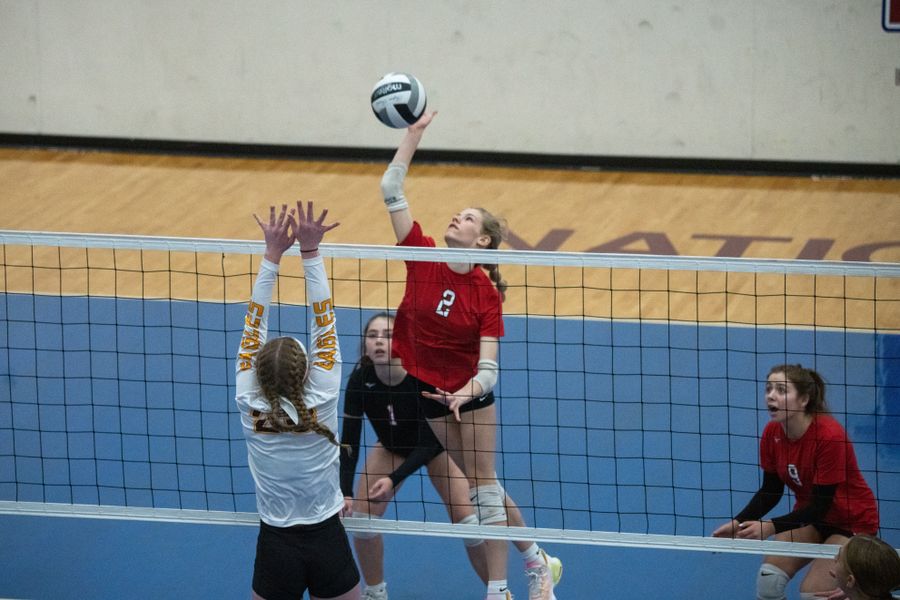
Ask any coach what separates a good libero from a great one and you will hear the same answer over and over. It is not vertical jump. It is not arm swing. It is the first step. The ability to read a hitter, process that information, and get the body moving in the right direction before the ball even leaves the hitter's hand is what defines elite back row defense. What most people miss is that this first step is not purely a reaction time issue. It is a mobility issue.
A defensive specialist can have lightning fast reflexes and still be slow to the ball if their hips do not open properly, their ankles cannot absorb load in a low athletic stance, or their thoracic spine cannot rotate to track the ball. Mobility is the physical foundation that reaction time is built on top of. You cannot fire a fast twitch response through a joint that will not move.
The Mobility to Speed Connection
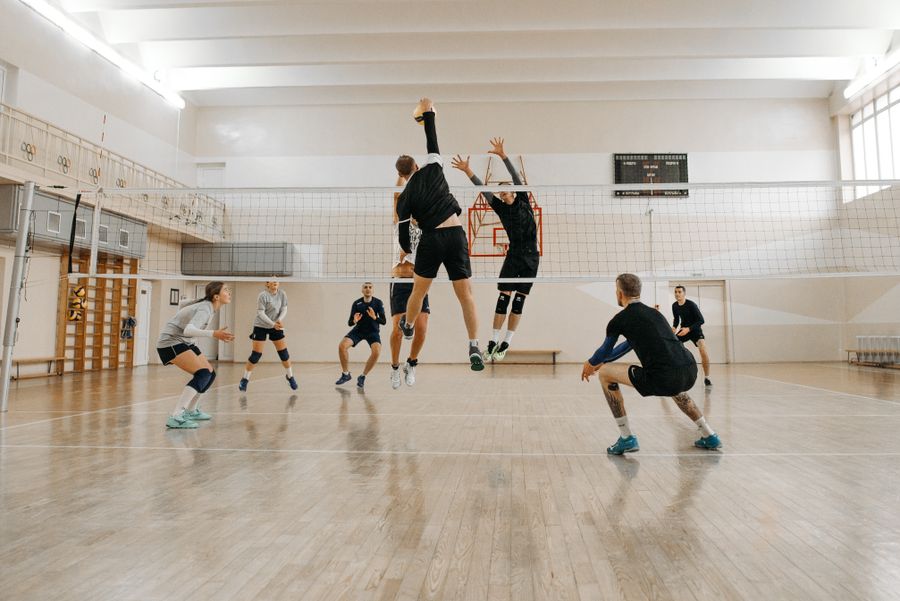
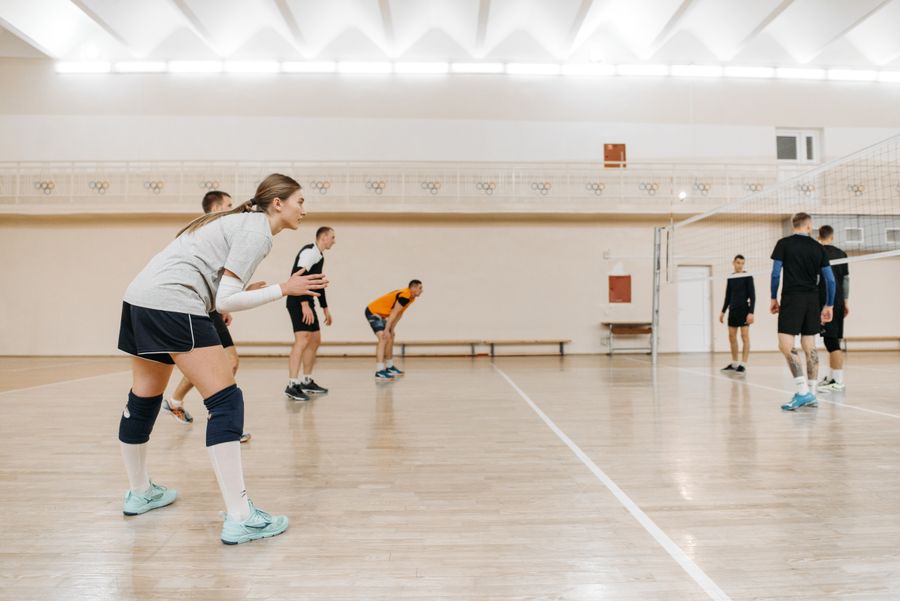
Volleyball defense happens in split stance, low center of gravity positions that most athletes never train outside of practice reps. A libero digging a hard driven ball needs immediate hip flexion, ankle dorsiflexion, and a stable but mobile spine to rotate and track the play. If any of those joints are restricted, the nervous system has to find a compensation pattern, and compensation always costs time. Even ten to fifteen milliseconds of delay caused by a mobility restriction can be the difference between a clean dig and a ball hitting the floor.
Our Mobility Assessment Protocol
Before we build a first step quickness program for any defensive specialist, we run a short battery of mobility assessments. These are not complicated tests, but they tell us exactly where an athlete's movement is breaking down. We look at three main areas: lower body loading capacity, rotational capacity through the trunk, and ankle stability under speed.
▶Deep Squat Assessment
The deep squat is the first thing we check because it tells us so much in one simple movement. We have the athlete stand with feet shoulder width apart and drop into the deepest squat position they can control, heels flat on the ground, chest up, knees tracking over the toes. We are watching for a few specific breakdowns. Do the heels lift off the floor, which usually points to tight ankles or calves. Does the low back round out at the bottom, which usually points to restricted hip flexors or a stiff thoracic spine. Does one knee cave inward, which tells us there is likely a hip stability issue on that side.
For a libero, the deep squat position is basically their base defensive stance under load. If they cannot get into that position comfortably in a controlled setting, they absolutely cannot get into it explosively during a live rally when a hitter is teeing off from the pin.
▶Thoracic Rotation Assessment
Next we test thoracic spine rotation, which is often the most overlooked piece of defensive mobility. We have the athlete kneel in a half kneeling position, arms crossed over the chest, and rotate the upper body as far as they can to each side while keeping the hips square. This isolates the thoracic spine and takes the hips out of the equation.
This matters more than people realize. When a libero shuffles to their left to dig a ball but the hitter tips the ball back to their right, the athlete needs to rotate through the trunk quickly to redirect their platform. If the thoracic spine is locked up, the athlete has to rotate through the low back instead, which is slower, less stable, and puts the lumbar spine at risk over a long season.
▶Ankle Dorsiflexion and Lateral Stability
The third piece we assess is ankle mobility, specifically dorsiflexion, using a simple wall test where the athlete tries to touch their knee to the wall with the heel planted, foot a set distance away. We pair this with a lateral bound and stick test to see how well the ankle stabilizes on landing when moving side to side, which is the exact demand of a shuffle step or crossover step in defense.
Restricted ankle mobility shows up constantly in defensive specialists who play with a higher, stiffer stance because they physically cannot sit low enough to get comfortable. That higher stance means a longer path to the ball and a slower first step, even if the athlete's reaction time itself is excellent.
Building the First Step: Exercises We Program
Once we know where the restrictions are, we build a program that targets those specific areas while also training the nervous system to move quickly out of those newly opened positions. Mobility work without a speed component just makes an athlete more flexible sitting still. We want mobility that transfers directly into game speed.
▶For the Deep Squat
- ◆Goblet squat holds with a two second pause at the bottom, three sets of eight, focusing on keeping the heels down and chest tall
- ◆Ankle rocks against a wall, holding a light stretch at end range for thirty seconds per side to build dorsiflexion
- ◆Cossack squats moving side to side to combine hip mobility with the lateral loading pattern used in a defensive shuffle
- ◆Banded hip flexor stretch performed after training to counteract the hours spent in a flexed defensive posture
▶For Thoracic Rotation
- ◆Half kneeling windmills, rotating the top arm open while keeping the hips locked, ten reps per side
- ◆Open book stretches performed lying on the side to gently build passive range before adding speed work
- ◆Med ball rotational throws against a wall, which train the thoracic spine to rotate quickly and with power, mimicking the redirect needed on defense
- ◆Quadruped thread the needle, slow and controlled, used as a daily reset especially after long hitting or blocking sessions
▶For First Step Quickness
- ◆Reactive shuffle drills where a coach or partner points left or right and the athlete must fire immediately into a low defensive stance
- ◆Five yard sprint starts from a split stance to train explosive acceleration from a game realistic position
- ◆Lateral bound and stick, focusing on a silent, controlled landing to reinforce ankle stability at speed
- ◆Ball drop reaction drills where the athlete starts in a ready stance and has to catch a dropped ball before it bounces twice, training visual reaction combined with lower body quickness
You do not get faster by only working on speed. You get faster by removing everything that is slowing you down first.
Putting It Together in a Weekly Plan
For most of our defensive specialists, we recommend mobility work built into the warm up three to four times per week, paired with a dedicated first step quickness session at least twice a week separate from regular practice. The mobility drills prepare the tissue and the joint, and the quickness drills teach the nervous system to use that new range immediately under speed. Doing one without the other leaves gains on the table.
We also encourage athletes to retest their deep squat and thoracic rotation every four to six weeks. Mobility is not a one time fix. It changes with training load, with fatigue, and with the volume of reps an athlete is putting in during a heavy match schedule. Tracking it keeps the program honest and keeps coaches focused on what the athlete actually needs instead of guessing.
Final Thought
Liberos and defensive specialists are often praised for their instincts, and instincts absolutely matter. But instincts can only move a body that is physically capable of moving. Mobility is not a supplemental piece of a defensive training program. It is the foundation the entire first step is built on. Fix the movement, and the speed almost always follows.
[1] Cook, G. Movement: Functional Movement Systems, Screening, Assessment, Corrective Strategies.
[2] Sahrmann, S. Diagnosis and Treatment of Movement Impairment Syndromes.
[3] National Strength and Conditioning Association, guidelines on multidirectional speed and change of direction training.